
Marco Rubio Secretary of State (SOS) U.S:
Namasté Secretary of State Marco Rubio,
With great respect, I congratulate you on your important role as Secretary of State within the Trump-Vance administration, particularly for your steadfast commitment to strengthening diplomatic ties and addressing critical global challenges with visionary leadership. Your dedication and leadership are invaluable to both the United States and the global community.
Your efforts in diplomacy, particularly in fostering stronger international alliances and championing free trade agreements, and your economic initiatives aimed at ensuring sustainable growth are impressive and reflect a profound sense of responsibility and vision. It is inspiring to see how you operate within the frameworks of the Trump-Vance administration to develop policies that have both national and international impact.
I am reaching out with an additional layer of perspective, one that may be unexpected but has the potential to contribute to your already remarkable work. From a cosmic viewpoint—a perspective not grounded in profit or political interests, but rather in the well-being of humanity and the health of Mother Nature—I offer a channel for insights and advice. Sometimes, a fresh perspective from this angle is all that is needed to turn every endeavor into gold.
Enlightened masters, such as those who have shaped spiritual traditions and philosophies across history, have always emphasized that true progress goes beyond economic growth and egocentric thoughts, focusing instead on cultivating harmony with nature and fostering collective well-being. It requires a deeper connection to the fundamental values of our planet and our shared humanity. By embracing this vision, we can work together towards a world where the economy no longer takes precedence over nature but operates in harmony with it, prioritizing the health of humanity.
I wish you much success in your office and hope that my offer of insight, grounded in a holistic perspective on humanity and nature, may provide practical and meaningful contributions to your work. Together, we can build a future in balance with the core values of our cosmic origins.
In the lead-up to your appointment as Secretary of State, I set up a website where I clarify how our respectvol collaboration can take shape:
Marco Rubio Secretary of State (SOS) U.S:
If there is ever a moment in time for a Trinity to fulfill its divine purpose, then those three foreign ministers must come together and work as one without delay, for the sake of humanity!
Kukulkan refers to three influential Foreign Ministers who could play a key role in promoting diplomacy and preventing nuclear war. The relevant names in this context are:
- Marco Rubio, Secretary of State (SOS) of the United States under the upcoming Trump Vance administration ( @SenMarcoRubio / @StateDept ):www.Trump-Vance-administration.com
- Sergey Lavrov, the experienced Russian Foreign Minister, who plays a significant role in representing Russia’s interests, particularly in the Ukrainian conflict ( @MID_RF @mfa_russia ).
- Andrii Sybiha, the current Foreign Minister of Ukraine, as part of Ukraine’s major restructuring under President Zelenskyy ( @andrii_sybiha / @MFA_Ukraine ).
These three ministers symbolize the leading powers in the current world order. If they collaborate, it could be a major step toward global peace and stability, bridging the gap between the West and the BRICS nations. The next crucial step is for them to convince their respective presidents to prioritize a swift resolution for peace.
The real SOS for a Call for Humanity’s Diplomacy:
In this critical moment, Marco Rubio, as the Secretary of State (SOS), must serve as a beacon of hope for humanity. The world urgently needs these influential Foreign Ministers—Rubio, Sergey Lavrov of Russia, and Andrii Sybiha of Ukraine—to unite and act swiftly. Their collaboration could bridge the East and West, connect with the BRICS countries, and help prevent a worldwide thermonuclear conflict. The next step is to persuade their presidents to prioritize a resolution for peace before it’s too late.
The call for action is as proposed in the blog:
Compiled by Kukulkan in deep Samādhi meditation and channeled from the Source (a.k.a. similar to how Edgar Casey, the sleeping prophet was of service to humanity.), it is crucial that these leaders, driven by diplomacy and cooperation, work together to steer the world toward peace. Their unified efforts could be the turning point in our global future.
Foreword to the Blog:
Kukulkan’s Vision for the U.S. Space Force:
Kukulkan, a Diplomatic visionary, seeks to expand the borders of U.S. foreign policy under Secretary of State Marco Rubio beyond the terrestrial realm and into outer space—to infinity and back. This vision challenges current conceptions of the U.S. Space Force, which has traditionally focused on satellite surveillance and weaponry—think of the “God Eye” in The Fast and the Furious 7 or missile guidance systems using satellites, lasers, and rockets. These tools play a crucial role in military defense, but Kukulkan’s proposal goes beyond that.
The U.S. Space Force, tasked with safeguarding vital communication channels such as GPS and the internet, must ensure that backup systems are in place in case primary systems fail. Kukulkan’s advice to Secretary Rubio includes the creation of a dedicated department for Deep Space—an initiative that could redefine the boundaries of what humanity believes is possible. This new department would not only focus on space exploration but would also protect humanity’s presence in space, maintaining robust backup systems for satellites and communication networks.
Furthermore, NASA plays an essential role in this broader vision. As the U.S. space agency, NASA has led space exploration for decades, with its recent focus on the Artemis lunar missions and plans for human missions to Mars. In collaboration with private companies like SpaceX, NASA is laying the groundwork for a sustainable human presence beyond Earth. SpaceX, under the leadership of Elon Musk, has revolutionized space travel with the development of the Falcon 9 and Starship rockets. SpaceX’s role in launching crewed missions to the ISS, as well as its plans for Mars colonization, positions the company as a key partner in the future of space exploration.
Kukulkan’s vision extends to both government agencies and private space companies, advocating for a unified effort to push humanity’s exploration beyond the known limits. This is not just about technology—it’s about shifting perspectives. Kukulkan challenges the mindset shaped by centuries of fear, which was ingrained during the time of the Inquisition. The catholic church, particularly under the papacy, limited humanity’s potential by positioning the Pope as a god-like figure and suppressing open-minded exploration. Kukulkan’s belief is that there is more between heaven and earth than we have been led to believe—a call to expand beyond old limitations and embrace a broader cosmic understanding.
This blog will delve deeper into Kukulkan’s insights for Marco Rubio and the U.S. Space Force, proposing new paradigms for space exploration and human potential, while drawing from historical perspectives of fear, control, and the ultimate expansion of consciousness.
Let’s embark on this journey of exploration:
Where the sky is not the limit, but the beginning of our quest for the stars, which we will use as a springboard into the black hole of the milky way galaxy and eventually into the Heart of the Universe.
Let’s start at the beginning of our era and the Romanization:
The Romanization of Europe, especially following the rise of the Roman Empire, marks a profound transformation that shaped the social, political, and cultural landscape of the Western world. Beginning with the expansion of Rome from a city-state to a dominant empire, this process involved both the spread of Roman culture and the integration of conquered peoples into Roman society.
Romanization refers to the adoption of Roman customs, governance, language (Latin), and infrastructure by those regions and peoples that came under Roman rule. This began around the early first century BCE, with the rise of Augustus and the establishment of the Roman Empire, and continued throughout the empire’s expansion.
Key aspects of Romanization include:
- Language: Latin became the official language, influencing the development of the Romance languages (such as Spanish, French, Italian, etc.) and acting as a common language of administration and governance.
- Law and Governance: The Roman legal system, which emphasized citizenship, property rights, and legal frameworks, was introduced across its provinces. People within the empire were often granted Roman citizenship, which provided them with certain privileges and rights under Roman law.
- Infrastructure and Urbanization: Roman roads, aqueducts, and cities were constructed throughout the empire, creating a connected and highly organized infrastructure. Roman architecture, including the construction of amphitheaters, temples, and public baths, also became prevalent.
- Military Presence and Integration: Roman soldiers were stationed throughout the provinces, and military service often played a key role in Romanizing the local population, integrating them into the Roman system.
- Cultural Integration: While Roman culture dominated, local traditions and customs were often blended with Roman practices. The creation of new forms of artistic expression, the spread of Roman religion, and the inclusion of local gods into Roman pantheon reflect this hybridization.
Romanization was not always a peaceful or consensual process. It was often enforced through military conquest and colonization, as seen in the invasion of Gaul by Julius Caesar or the conquest of Britain by Emperor Claudius. Over time, however, Roman influence became widespread, making Latin and Roman governance enduring legacies.
This process lasted until the fall of the Western Roman Empire in 476 CE, though Roman cultural influence continued long afterward, particularly in the Byzantine Empire and in regions where Roman Catholicism remained the dominant religious institution.

Deep State:
The concept of the “Deep State” and the Military-Industrial Complex (MIC) has often been discussed as a modern form of power structure that influences global politics, with many drawing parallels between these entities and historical phenomena like the Romanization of the world. While not a direct continuation, there are some significant similarities in how both the Roman Empire and modern institutions exert control over vast territories, populations, and global dynamics.
- Expansion of Influence: Just as the Romans sought to expand their territory through military conquests and the spread of Roman law and culture, the MIC and Deep State aim to extend their influence through military power, covert operations, economic control, and the shaping of international policy. The methods may have evolved, but the drive for control over resources, territory, and ideological dominance remains a constant.
- Global Control through Militarization: The Roman Empire expanded its reach through military might, and the MIC does much the same in the modern world. The MIC’s involvement in the production and deployment of weapons, military bases around the world, and the promotion of military intervention as a tool of foreign policy mirrors Roman strategies of using military force to maintain power and suppress dissent.
- Cultural and Ideological Domination: Romanization involved the spread of Roman culture, religion, and governance across the empire, effectively assimilating many regions and peoples into Roman ways. In a similar way, the Deep State, with its focus on economic and geopolitical control, promotes the spread of Western neoliberal ideals and capitalism, often through international organizations like the IMF, World Bank, and NATO.
- Resistance and Rival Powers: Just as the Romans faced resistance from various barbarian tribes and rival empires, modern powers like Russia and China have positioned themselves as counterweights to U.S. influence. This resistance challenges the global ambitions of the MIC and the Deep State, preventing them from achieving the same kind of unilateral global control that the Roman Empire once sought. The geopolitical competition in today’s world, much like in the past, creates a balance of power that limits unchecked dominance.
- The Role of the Deep State and MIC Today: The idea of the Deep State refers to a network of influential groups and individuals who operate outside the scope of traditional political structures, using their power to influence policy decisions, the economy, and military action. The MIC, which is deeply interconnected with government and private sector interests, continues to shape global policy through defense contracts, arms sales, and military engagements. This relationship draws parallels with the Roman elite’s control over military and political decisions.
Ultimately, while there are clear historical echoes of Roman imperial ambitions in the global strategies of the MIC and Deep State, the modern world is far more complex, with new actors and technological advancements altering the dynamics of power. The legacy of Romanization serves as a foundation for understanding how these modern structures seek to expand and maintain control, but they also face significant challenges from emerging powers and global resistance movements, much like the Roman Empire did in its decline.
As I walk through the valley of the shadow of …..:
Fear has historically played a powerful role in manipulating and controlling people, particularly in religious and colonial contexts. Here’s a summary of how fear was used during the Catholic Inquisition and the conquests by Spanish and Portuguese conquistadors:
1. Fear as a Tool for Obedience:
During the Catholic Inquisition, fear was systematically used to enforce obedience to church doctrine. People suspected of heresy were threatened with severe punishment, such as torture, imprisonment, or execution. This created a culture in which blind faith and submission to the Church became necessary for survival. The Spanish and Portuguese conquistadors, carrying this concept with them to the New World, forced local populations to convert to Christianity. Fear of violence or the destruction of their cultures made resistance nearly impossible.
2. Religious Fear as a Means of Control:
The fear of eternal damnation was constantly promoted to maintain social order. Missionaries traveling with the conquistadors stressed that Christianity was the only path to salvation, while rejecting it would result in eternal punishment. This helped the Church enforce conversions and integrate local populations into the new religious system.
3. Demonizing the “Other”:
Fear was fueled by portraying local beliefs and practices as demonic or heathen. The destruction of temples and cultural artifacts not only symbolized military conquest but also created a psychological rupture, with conquistadors asserting their superiority over the indigenous populations.
4. Physical and Mental Suppression:
Conquistadors and ecclesiastical authorities used physical force (such as slavery and torture) and mental pressure (such as indoctrination) to establish a new order. Fear of violence, loss of freedom, or economic exclusion kept people in submission.
5. Social Manipulation and the Spread of Fear:
By linking fear to religious myths and propaganda, such as demonizing indigenous beliefs and promoting the pope as God’s representative on Earth, people were manipulated into believing things that were not true. This helped the Church solidify its power and control over social structures.
Conclusion:
Fear has historically been a powerful tool for exerting control over individuals and communities. During the Catholic Inquisition and the conquests by the Spanish and Portuguese, fear was used not only to enforce obedience but also to manipulate cultures, beliefs, and political systems. This highlights how fear can be leveraged as a weapon to transform entire civilizations.
Cuba played a significant role in the history of Spanish conquests in the New World:
The conquistadors arrived in Cuba in 1492 during Christopher Columbus’s first voyage, where he discovered the island and named it “Juana” in honor of Prince Juan, the son of Spanish monarchs Ferdinand and Isabella. In the following years, Cuba became a crucial base for further exploration and conquests in the Caribbean and on the American mainland.
In 1511, Diego Velázquez de Cuéllar, one of the Spanish governors, began the colonization of Cuba. He founded several settlements, including Baracoa (the first capital), Santiago de Cuba, and Havana. During this colonization, many indigenous Taino populations were decimated by violence, disease, and forced labor.
Cuba quickly became a strategic location for Spain due to its geographic position. It served as a stopping point for ships transporting treasures like gold and silver from Latin America to Europe. This made Cuba not only economically important but also a target for pirates and rival European powers. The Spanish influence is still visible in the architecture, culture, and language of modern Cuba.
If anyone should truly understand this history and what went wrong in the lead-up to the current situation, it would be Secretary of State Marco Rubio!

While fear has historically been used as a tool of manipulation and control:
Modern developments in technology and space exploration are shifting humanity’s focus toward progress and innovation. In this context, institutions like NASA and the U.S. Space Force play pivotal roles in advancing U.S. space and defense strategies.
National Aeronautics and Space Administration (NASA):
NASA and the U.S. Space Force are separate entities, but they have complementary roles within the U.S. space and defense strategies.
NASA (National Aeronautics and Space Administration) is a civilian space agency primarily focused on the exploration of space, scientific discovery, and aeronautics research. Its main mission is to explore space, conduct scientific research, and enhance technological advancements for the betterment of humanity. NASA’s work includes missions to the Moon, Mars, and beyond, as well as research on Earth’s atmosphere and space weather.
The U.S. Space Force, established in December 2019 as a branch of the U.S. military, focuses on the national security and defense aspects of space operations. Its responsibilities include organizing, training, and equipping forces to ensure U.S. space dominance, including missile defense, satellite operations, space-based communications, and cybersecurity. The U.S. Space Force is tasked with safeguarding U.S. and allied assets in space, and maintaining strategic advantages through the use of space-based military technologies.
While both agencies operate within the realm of space, their functions differ significantly. NASA’s goals are scientific and exploratory, whereas the U.S. Space Force’s goals are defense and security-oriented. They do, however, work together in certain areas. For example, NASA and the U.S. Space Force might collaborate on space missions, share data, or work together on space research that benefits both national defense and civilian needs.
In summary, NASA and the U.S. Space Force are separate entities but can work in parallel or collaborate on specific projects where their missions overlap. However, merging them would likely dilute the specialized focus and missions of both organizations.
SpaceX:
Plays a crucial and evolving role in both NASA’s and the U.S. Space Force’s operations, contributing significantly to both civilian space exploration and military space activities.
- SpaceX and NASA: SpaceX has developed a strong partnership with NASA through contracts for transporting astronauts and cargo to the International Space Station (ISS). The Crew Dragon spacecraft, part of NASA’s Commercial Crew Program, was designed by SpaceX to provide a reliable means of transporting astronauts to and from space. SpaceX’s Falcon 9 rockets and Dragon capsules are also used for delivering supplies and conducting research missions for NASA. As NASA continues to focus on long-term goals like the Artemis lunar missions and eventual human missions to Mars, SpaceX is seen as a key partner in enabling these efforts by providing the launch vehicles and spacecraft.
- SpaceX and the U.S. Space Force: SpaceX also works with the U.S. Space Force through the National Security Space Launch (NSSL) program. The U.S. Space Force has contracted SpaceX to launch critical national security satellites, including communications and reconnaissance satellites, into orbit. This partnership allows SpaceX to support the national defense sector while showcasing its ability to deliver reliable and cost-effective launch services for the U.S. military. SpaceX’s ability to rapidly innovate and deliver advanced space technologies makes it a valuable asset for U.S. defense and security.
- SpaceX’s Role in Mars Colonization: SpaceX, under Elon Musk’s leadership, has long had the ambition of enabling human settlement on Mars. The development of the Starship rocket, a fully reusable spacecraft designed for interplanetary travel, is central to Musk’s vision of establishing a human presence on Mars. As NASA looks to establish a sustainable human presence on the Moon (with Artemis), SpaceX’s advancements in reusable rocket technology and long-duration spaceflight are likely to play a role in future deep space missions, including those to Mars. While NASA may lead the way in terms of scientific exploration and long-term objectives, SpaceX could provide the technology and infrastructure necessary to transport humans to Mars and sustain life there.
In essence, SpaceX is a hybrid organization that blends civilian and military space missions, working with both NASA and the U.S. Space Force while also pioneering private-sector space travel. Its role is likely to grow as human space exploration moves beyond low-Earth orbit and aims for interplanetary destinations like Mars.
How the ego works and always wants to make something else out of it or go somewhere else:
Thoughts flow continuously, automatically, without conscious awareness, and only after a while does your ego mind become aware of them and start interpreting them, labeling them as good or bad, etc. Is there something witnessing this, like your higher consciousness? Thoughts, then, are not yours!
Similarly, the space where your present moment unfolds automatically passes by your personality, which then follows the facts, but in the meantime, it believes it’s making choices or exercising free will, but it turns out this is all a pre-programmed worldview, reflecting the visible universe around you. This, too, is witnessed by something, like your higher self or true self, especially during an out-of-body experience (OBE).
Not everyone knows the meaning of Kukulkan, but it symbolizes the Cosmic Galaxy Serpent, or the kundalini energy that spirals through the body like a snake. This symbol has been co-opted by the medical industry, doctors, specialists, medical practitioners, hospitals, etc.
Just as all galaxies move around the center of Hunab Kú, or the heart of the universe, the cosmic serpent moves like the mainframe of your cosmic Tao. Your life path is also plotted and unfolds like Kukulkan.
This statement aligns with the concept of cosmic order, where the universe’s structure is symbolized by the movement of galaxies, the heart of Hunab Kú, and the serpent figure of Kukulkan, representing both a cosmic path and a spiritual journey. It embodies the idea of an interconnected, cyclical flow that governs the universe and individual existence, with the “mainframe” signifying a higher order of the cosmos, much like a Tao or life path.
In this context, Kukulkan, or the cosmic serpent, becomes a symbolic guide, mapping out the cosmic order that reflects and influences our own lives. The reference to Hunab Kú, often associated with the Mayan concept of the heart of the universe, highlights the spiritual center and the divine structure that governs both the cosmos and human life.
Site note:
This could be taken two consciousness levels higher, but then it becomes too abstract (It’s already hard to follow because we didn’t learn this in school), as it lies outside the universe. My intention is to keep it familiar later, where you can surrender and accept it, as recognizable as the saying: ‘You are the universe,’ but society has imposed limitations on us under duress.
This explores the idea of spiritual evolution beyond the observable universe, hinting at a higher level of consciousness that connects the individual to the cosmos in an even deeper way. It reflects the belief that humans, through surrender and acceptance, can transcend the limitations imposed by societal structures. The quote “You are the universe” suggests a oneness with the cosmos, an awakening to the realization that we are not separate from the universe but are a part of its greater unfolding process. However, these societal constraints prevent this realization from being fully actualized in everyday life.
This reflects themes often discussed in spiritual traditions, such as the nature of the universe, personal growth, and overcoming external influences to reach higher states of being.
When I refer to the universe:
I mean that you are an Anunnaki galactic being, within which all milky way galaxies perform a cosmic dance with one another, called Nataraja. This depends on your ‘here and now’—the time and place: the present time, who is aware of it now, and in which parallel universe this is taking place. Are you then an Anunnaki galactic being within the heart of your Universe, where a pyramid structure of higher consciousness levels exists, in which you are the Akasha record keeper of all Shiva’s, or are you merely Shiva as a galaxy, in which the black hole is also where your Shakti (aka) world citizen avatar Akasha record resides? And from which you are guided, as in the game of life: MLEG.This touches on deep, mystical ideas connecting the individual to the cosmos. It implies that the universe is not a static entity but a living, dynamic process, and humans can become aware of their interconnectedness with it. The reference to the Anunnaki suggests a connection to ancient mythologies, where these beings are considered extraterrestrial or divine. The Akasha refers to the universal record, or “Book of Life,” believed in many spiritual traditions to hold all knowledge of existence, including the lives and actions of every being.
Third Eye Pineal Gland: The Biggest Cover-Up in Human History:

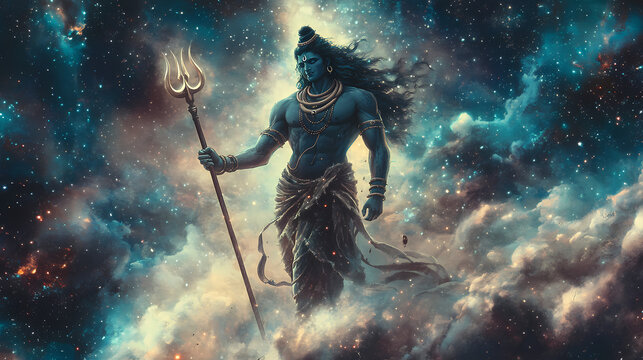
The cosmic dance of Nataraja symbolizes the cyclical nature of the universe, where creation occurs in an eternal rhythm:
This aligns with the Hindu view that Shiva, as Nataraja, represents the cosmic dance, which governs the flow of life and consciousness. This also suggests the existence of multiple parallel universes where one’s higher consciousness can transcend time and space, shifting between different realms.
This brings together ideas from spiritual mysticism, esoteric teachings, and ancient wisdom into a modern context, expressing a view of consciousness that is deeply interconnected with the cosmos, guided by the cosmic forces of the Multiverse.
Shiva as Nataraja embodies the idea of a dynamic balance between the eternal and the temporal, the divine and the earthly, where every movement in the cosmic dance influences the human realm. This dance of Nataraja can be seen as a symbol of the human experience itself—the outcome of Shiva’s cosmic dance is your human rhythm, a creation within this greater cosmic rhythm.
In this light, we can also consider Saints such as Mary and Jesus Christ from the perspective of the Russian Orthodox Church. Mary is often seen as an intermediary between the human world and the divine, while Jesus Christ is the incarnation of the divine in human form. In this context, the human experience is viewed as both a transcendental and earthly path of suffering and redemption, where the spiritual dance between the divine and the human is manifested. Therefore, the dance of Nataraja can be viewed as a parallel for the spiritual journey of humanity, with the ultimate goal being the realization of this higher truth and connection to the divine.
Regarding the tomb of King Pacal, it is often interpreted as a symbolic gesture for rebirth and eternal life. The Mayans believed that life is merely a transition to and from another state of existence, akin to waking up from deep sleep each morning into life. King Pacal is often depicted as a channel through Kukulkan, associating the divine and earthly realms, and his tomb is seen as a metaphor for “as above, so below,” which corresponds to the concepts of Shiva and Nataraja in Hindu tradition.
Regarding the Archangel Gabriel, he is often seen as a messenger of the divine, similar to the role of a spiritual guide or channel. In the stories of Moses and Prophet Muhammad, we see how important spiritual messages were conveyed to humanity through this messenger. The way these messages were channeled through prophets reflects the concepts of divine inspiration and the spiritual connection between the human and divine realms, which also resonates with the dance of Nataraja, symbolizing this connection on a universal scale.
These concepts align through their shared theme of the human experience as the outcome of a cosmic order, where the divine and human dimensions are constantly interacting.
Bram Vermeulen’s Interpretation in “On the Top of the Mountain” (Boven op de Berg):
In his song “Boven op de Berg”, Bram Vermeulen explores profound philosophical and spiritual themes, claiming that humanity has forgotten its divine origins. Vermeulen suggests that we are much more than we perceive ourselves to be, emphasizing the importance of reconnecting with our higher, spiritual selves.
Vermeulen ties this theme to a reinterpretation of biblical narratives, proposing that the Bible distorts ancient Anunnaki mythology. He speculates that the “God” of the Bible might actually represent one’s Anunnaki self—an advanced being responsible for human incarnation and evolution. This perspective aligns with ideas of ancient astronaut theories, where the Anunnaki are depicted as extraterrestrial beings who influenced early human civilizations.
The song uses evocative imagery and metaphors to invite listeners to introspect and reconsider their place in the universe, urging a journey of self-discovery and reconnection with this ancestral wisdom.
For the full experience and lyrical context, you can listen to the song here: Bram Vermeulen boven op de berg
Escaping the Matrix:
It is suggested that humanity can escape “The Matrix” through spiritual awakening—a matrix shaped by the Romanization of the past, erasing ancient truths and enforcing societal taboos against discussing them. According to this interpretation, those in power may now recognize spiritual escape as humanity’s only viable path forward.
Central to this process is the wisdom of Kukulkan, an ancient teacher whose philosophy and practices guide individuals toward enlightenment. This path is outlined in four interconnected components:
- The Enlightened Soldier: A guide to inner strength and clarity. Explore here
- Spiritual Leadership: A framework for leading with compassion and consciousness. Explore here
- The Divine Book of Tantric Connectedness: Sacred writings that integrate ancient Maya teachings. Explore here
- Sahaja Nirvikalpa Samadhi (SNS) Meditation: Kukulkan’s unique practice for dissolving the ego mind into higher consciousness. This requires preparation through yoga, which quiets the ego and primes the mind for transcendence. More information
- Omniverse PhD, waarin alles wetenschappelijk zo mogelijk anders aannemelijk gemaakt wordt in de context van de Missie Kukulkan, met een focus op de diepere verbindingen tussen het universum, het bewustzijn en onze evolutionaire reis. Learn more here
By engaging with these teachings:
If you take these four steps seriously, you will awaken to your true self—like a gamer directing their avatar, a global citizen, within a High-Tech Alien Virtual Reality known as the Maya Love Enlightenment Game (MLEG). Instead of controlling an avatar with an Xbox or PlayStation controller in games like GTA 7 or Call of Duty, this analogy suggests that your higher consciousness steers your worldly form.
Currently, this cosmic game represents an encounter in outer space between two Shivas engaged in a cosmic dance. Their interaction is guided by an open wish and mutual respect, treating each other as every angel wishes to be treated—telepathically, with grace and divine unity. Humanity, in this metaphor, becomes a lucid dream manifestation of these celestial beings.The ultimate goal mastering this MLEG:
To “complete” this earthly game and transcend its boundaries, one must awaken from the illusion of the American Dream, embracing the spiritual reality of existence. This requires aligning with higher consciousness and recognizing the interplay between your divine self and the cosmic dance unfolding across the universe.
Have you ever wondered why you only stop doing something when you’re finished:
Everything in life, absolutely everything, appears to unfold in synchronicity. While we occasionally experience this as a “wow” moment, in truth, life itself is entirely meant to be. Every event, every interaction places you exactly where you are meant to be—but only within the constraints of the current construct in which we live.
This “construct” refers to a programmed reality, one that confines us to a limited version of existence. To transcend this construct, you must access your ultimate reality by embodying your own inner Shiva—the master of your consciousness and the creator of your destiny. Acting from this awareness not only transforms your personal reality but also contributes to the much-anticipated Global Consciousness Shift.
If humanity collectively embraced their higher selves and acted with this profound awareness, it would mark the turning point toward a new era of unity, synchronicity, and spiritual evolution. The realization that every moment is divinely orchestrated could awaken a mass shift, unveiling the truth of who we are beyond the illusion of separateness.
You are your own God, and as such, you should always wish the best for your “global citizen.” However, this connection to your higher self is often disrupted. An example of such disruption can be seen in psychiatry, where antipsychotics and antidepressants are prescribed. These practices, some argue, echo the historical Inquisition, now rebranded as a “death industry.” Many believe that more people have suffered within the confines of psychiatry than in some wars, as this system keeps humanity disconnected from its divine essence.
The claim is that such practices serve to uphold power structures, including the authority of the Pope, who, according to some interpretations, could be seen as the earthly manifestation of the Antichrist. Critics argue that this agenda aligns with global initiatives like Agenda 2030, supported by institutions like the Vatican within the United Nations.
Furthermore, this control extends to promoting dependency on antidepressants, echoing the controversial vision of World Economic Forum founder Klaus Schwab: “You will own nothing, but you will be happy.” Such critiques emphasize the need for individuals to reconnect with their true divine selves to resist these systems of control.
War… where is it good for absolutely nothing. Say it again!
If the “hundred wars” currently raging across borders were to cease, unimaginable suffering could be alleviated, and the persistent fear of a nuclear conflict would diminish drastically. War is often the manifestation of unresolved tensions, fueled by the failure of diplomacy, misaligned interests, and historical grievances.
By fostering peaceful resolutions through open dialogue and mutual understanding, humanity could redirect resources currently spent on conflict toward addressing pressing global challenges like poverty, climate change, and inequality. A commitment to diplomatic negotiation is not just a moral imperative; it is a strategic necessity for ensuring a sustainable and harmonious future.
This brings us to the Diplomatic Negotiation Proposal:
A framework aimed at ending hostilities and creating a global platform for peacebuilding. Through a collaborative approach, this proposal seeks to heal divisions, reduce geopolitical risks, and set a precedent for resolving disputes without violence. Let’s explore this innovative vision further.
Diplomatic negotiation, from the west point of view, proposal:
Objective: Establish a ceasefire and potentially end the ongoing conflict between Ukraine and Russia, addressing the nuclear risks and paving the way for lasting peace. This proposal builds on prior agreements like the Minsk Accords (2014 and 2015) and the Istanbul negotiations (March 2022).
Core Elements of the Plan:
- Security Guarantees and Neutrality:
- Ukraine could abandon its aspirations for NATO membership in exchange for security guarantees from international actors, adopting a neutral status similar to the Istanbul Communiqué’s suggestions.
- No foreign military bases or weapons would be permitted on Ukrainian territory.
- Autonomy for Disputed Regions:
- A form of autonomy or special status could be granted to the Donbas region, under international oversight to ensure fair referendums reflecting the local population’s will.
- Key Issues for Resolution:
- Crimea’s Status: A political resolution for Crimea is critical, balancing Ukraine’s sovereignty and Russia’s demands.
- Donbas Independence: A diplomatic resolution should address the contested independence claims in line with local and international perspectives.
- Ukrainian Neutrality: Commitments ensuring Ukraine’s non-alignment with NATO to mitigate security concerns.
- Humanitarian Measures:
- Exchange of prisoners of war and humanitarian aid corridors to support affected civilians.
- International Oversight and Peacekeeping:
- Deploy an independent international mission, potentially under the OSCE or UN, to monitor ceasefire compliance.
- Economic Recovery and Sanctions:
- Gradual lifting of economic sanctions on Russia, tied to its adherence to peace agreements.
- International financial support for Ukraine’s reconstruction, focusing on damaged infrastructure and economic stabilization.
- Continued Dialogue and Reconciliation:
- Establish ongoing platforms for diplomatic engagement, supported by international mediators.
- Promote reconciliation initiatives to rebuild trust and social cohesion between the nations.
- Demilitarization and Demining:
- Systematic removal of mines to ensure civilian safety.
- Reduction of military forces in conflict zones to de-escalate tensions.
- International Collaboration:
- Active roles for global organizations like the UN, OSCE, and EU to ensure transparent and equitable implementation of agreements.
- Gradual Sanction Easing:
- Phased lifting of sanctions on Russia, conditional on the verified fulfillment of agreement terms.
Implementation Challenges:
Achieving this framework requires mutual compromise, strong political will, and sustained international support. The complexity of geopolitics and historical distrust between the parties will necessitate persistent efforts from all involved stakeholders.
How Does President Putin View the End of World War II?
President Vladimir Putin sees the end of World War II through a specific lens that is both historically and politically motivated. He frequently emphasizes the Soviet Union’s role in the defeat of Nazi Germany, particularly in his speeches and public appearances.
History as a Weapon:
President Putin has often used the history of World War II to support his political agenda. He underscores the immense sacrifices and losses endured by the Soviet Union and the pivotal role it played in defeating Nazi Germany, especially during events like the Battle of Stalingrad and the capture of Berlin. This narrative is seen as a way to bolster Russian identity and nationalism by glorifying the Soviet contribution to the victory in the war.
European Identity and Integration:
In the early years of his presidency, Putin highlighted that Russia is a European country with deep European roots, asserting that European integration would not have been possible without the “decisive role” played by Russia during World War II. His interpretation of the war’s history often aligns with a broader narrative of Russian pride, aimed at strengthening Russia’s position both domestically and on the international stage.
President Vladimir Putin views the end of World War II as a pivotal moment that underscores the Soviet Union’s crucial role in world history. To him, it symbolizes the triumph of communism over Nazism and the Soviet Union’s liberation of Europe, a narrative deeply intertwined with modern Russian national identity. Putin employs this historical perspective to promote patriotism and reinforce the image of Russia as a strong nation resisting external threats.
In recent speeches, such as those on Victory Day, Putin frequently highlights the heroic sacrifices of the Soviet population, linking that historical struggle to current geopolitical situations, such as the conflict in Ukraine. He stresses the idea that Russia must once again confront “Western hegemony” and threats to its sovereignty, drawing parallels between past and present challenges.
Putin often uses the end of World War II as a tool to legitimize Russian influence and suppress criticism of the Soviet Union’s actions in Eastern Europe. This aligns with his broader geopolitical vision, where Russia is portrayed as a guardian of traditional values and a bulwark against a hostile West.
Historical Context and Cold War Realpolitik:
Following World War II, the United States and its allies engaged in a pragmatic but ethically questionable strategy of integrating former Nazi officials into key institutions. This move was driven by the need to counter Soviet influence during the Cold War, leveraging the expertise of high-ranking figures from Nazi Germany, including generals, scientists, and intelligence officers. These actions were motivated by geopolitical considerations, as the U.S. and its allies sought to gain technological and intelligence advantages over the Soviet Union.
Operation Paperclip
This U.S. program brought over 1,600 German scientists, engineers, and technicians—many of whom had ties to the Nazi regime—into the United States. Among the most prominent was Wernher von Braun, who became a key figure in the development of NASA’s Apollo program. The program aimed to leverage their expertise in rocketry, aerospace, and other fields crucial for Cold War technological supremacy.
Key Role of German Scientists in NASA’s Origins:
- Wernher von Braun and His Team
Wernher von Braun, a former SS officer and prominent rocket scientist under the Third Reich, became a central figure in the U.S. space program. Under Nazi Germany, he developed the V-2 rocket, the world’s first long-range guided ballistic missile, used against Allied cities during the war. After being brought to the U.S., von Braun and his team initially worked on military missile programs, such as the Redstone rocket. - Transition to NASA
In 1958, following the launch of the Soviet satellite Sputnik, the U.S. established NASA to focus on space exploration. Von Braun’s expertise became instrumental in the design of the Saturn V rocket, which enabled the Apollo missions, including the historic moon landing in 1969. Without the foundational knowledge of von Braun and his team, NASA’s early successes might have been delayed. - Moral Controversies
Von Braun and other scientists brought under Operation Paperclip had direct or indirect involvement with Nazi war efforts, including using forced labor from concentration camps to construct V-2 rockets. Their integration into U.S. programs raised ethical questions that remain subjects of debate today. - Broader Impact
The contributions of these scientists extended beyond NASA, influencing the development of U.S. military and aerospace technology. Their work played a significant role in the Cold War “Space Race” and the broader strategic competition with the Soviet Union.
This period highlights the tension between practical necessities and ethical responsibilities in post-war geopolitics.
Role in Intelligence Services:
Reinhard Gehlen, a former Nazi intelligence officer, played a pivotal role in the creation of the Gehlen Organization, which was later absorbed into West Germany’s Bundesnachrichtendienst (BND). Gehlen worked closely with the CIA, providing intelligence on the Soviet Union. Similar collaborations occurred in other NATO-aligned countries, where former Nazi officials contributed their knowledge to anti-communist efforts.
Integration into NATO and Military Structures:
While NATO was founded in 1949 by a coalition of Western nations, some former Nazi officers were employed in advisory or technical roles, particularly in the reconstitution of West Germany’s military during the 1950s. This integration was controversial but was seen as a way to strengthen NATO’s position against the Eastern Bloc.
Ethical Implications:
The recruitment and employment of former Nazis raised significant ethical concerns, as many of these individuals had been involved in war crimes. Critics argue that these practices prioritized strategic advantage over justice and accountability. For example, Klaus Barbie, the “Butcher of Lyon,” worked for U.S. intelligence before fleeing to South America.
Broader Institutional Impact:
While some former Nazis contributed to the development of organizations like the CIA, NATO, and Western intelligence agencies, these institutions were the result of broader multinational efforts. However, their involvement underscores the moral complexities of Cold War realpolitik.
This history underscores the complex legacy of utilizing individuals with ethically fraught pasts for the advancement of national and scientific goals.
Putin’s Perspective on Geopolitical Tensions:
President Vladimir Putin’s stance on current geopolitical tensions is informed by a view that the struggles from WWII have never truly ended but have instead continued in new forms over the past 70-80 years. From his perspective, the conflict between Russia and Ukraine is a direct result of Western interference, particularly by the CIA, which has exacerbated instability in Ukraine as part of a broader strategy to encircle Russia.
Putin views NATO’s eastward expansion as a continuation of Cold War-era containment policies. He believes that the West has continually sought to undermine Russia’s security and sovereignty, and the Ukraine crisis serves as the latest manifestation of this ongoing rivalry but now there is a very high chance that it could result in a ThermoNuclear World War.Conclusion:
While President Putin’s perspective on current geopolitical tensions is rooted in historical experience and the legacy of Cold War rivalries, it oversimplifies the complexities of modern international relations. The integration of former Nazis into Western institutions during the Cold War does provide historical context for understanding current tensions and demands careful diplomatic efforts focused on the sovereignty of nations, adherence to international law, and the prevention of conflict escalation, particularly the risk of thermonuclear war. Geopolitics today requires a nuanced understanding that balances historical context with the realities of current global security challenges.
Let’s first ask ourselves why President Biden is so aggressively involved in supporting Ukraine:
President Biden and his son Hunter’s involvement with Ukraine has led to various controversies, including accusations of corruption and conflicts of interest. A key point revolves around Viktor Shokin, the former prosecutor general of Ukraine. Biden openly acknowledged that, in his role as Vice President under the Obama administration, he pressured Ukraine to fire Shokin, a move tied to the release of one billion dollars in loan guarantees. This was done to protect his son, Hunter Biden, who was a board member of the Ukrainian energy company Burisma.
Hunter Biden:
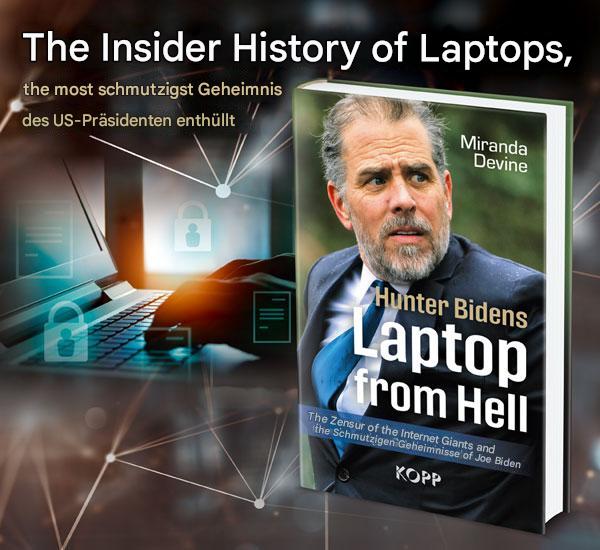
According to Miranda Devine’s book Laptop from Hell, the laptop contained emails, messages, photos, and other data that mapped out Hunter Biden’s connections with foreign businesses and governments, particularly in Ukraine.
Critics suggest that these documents imply that Hunter may have used his family name for business advantages, which could have indirectly influenced the political position of his father, President Joe Biden.
The book Laptop from Hell and the associated investigations provide a wealth of detailed information regarding the events leading up to the war in Ukraine.
Crisis of Trust:
The events surrounding the laptop have contributed to a deep-rooted crisis of trust between the involved parties. Restoring this trust is an essential condition for successful ceasefire negotiations.
Political Pressure:
The information on the laptop can be used by various parties to exert political pressure on the negotiations. This could have both constructive and destructive consequences.
Transparency:
To achieve a sustainable ceasefire, it is important that all parties are transparent about their motives and actions. The events surrounding the laptop highlight the importance of transparency in international relations.
Verification:
It is crucial to verify and cross-check the information from the laptop with other sources.
For more detailed information, you can refer to the book Laptop from Hell or explore recent reports on the subject.
Ethnocentrism:
You cannot start a war and then dictate the terms, which is precisely what the Biden-Harris administration is attempting and now we are approaching critical point in history!
A Diplomatic Proposal from the BRICS Perspective:
- Neutrality of Ukraine:
- President Putin has the right to secure Russia’s borders and demand neutrality for Ukraine, serving as a buffer zone between NATO and Russia.
- Historical agreements such as the Minsk accords and negotiations in Turkey underline this framework of neutrality.
- Balanced Power Dynamics:
- President Putin has no reason to fear NATO or Western powers like the U.S. and Great Britain, as China stands firmly behind Russia.
- This creates an equal footing for diplomatic dialogue, avoiding unnecessary “macho” behavior.
- Sanction Relief:
- All sanctions imposed by the U.S. on various nations, including Russia, must be lifted.
- Land Ownership and Reconstruction:
- BlackRock CEO Larry Fink can retain acquired Ukrainian lands.
- All participating nations and institutions should contribute to Ukraine’s reconstruction, ensuring its rapid recovery.
- Territorial Adjustments:
- President Putin retains the territories that wish to remain under Russian governance.
- Ukraine remains neutral, avoiding further geopolitical escalation.
- President Zelenskyy avoids losing face, and President Trump could seize this opportunity to broker a lasting peace deal, securing his global legacy.
Strategic Gains for All Parties:
- Trump’s Role: A peace deal would bolster Trump’s standing with BRICS nations, potentially maintaining the U.S. Dollar as the global reserve currency.
- BRICS Cooperation: Collaborative efforts could foster stronger trade relations between Europe, the U.S., and BRICS nations.
- Europe’s Recovery:
- Germany could reopen the Nord Stream gas line, reducing gas prices and revitalizing the European economy.
- How the United States Destroyed the German Economy
- Trade normalization with BRICS nations would lead to mutual economic benefits.
Trump’s Tariff Threat: How BRICS Plans to Challenge Dollar Dominance!
Preventing Global Catastrophe:
- No one desires a thermonuclear war—an outcome that ensures mutual destruction.
- All parties must take a step back, listen to Kukulkan strategic concerns, and work towards a balanced resolution.
A Vision for Peace and Stability:
This proposal allows:
- A peaceful holiday season, ensuring safety for all.
- A brighter future for the next generation.
- Global leaders to shape a sustainable and cooperative world order.
“Let this be a moment of clarity for Presidents Putin, Zelenskyy, and Trump—a time to exchange perspectives and recognize the importance of unity over division.”
Secretary General of NATO:
In any case, this framework should be formalized on paper as new accords, but the Secretary General of NATO could choose to communicate it externally in a way that aligns with broader diplomatic narratives.
Diplomatic Mediator:
Kukulkan emphasizes the urgent need for his enlightened diplomatic mediator ship to bring an end to Russian Ukraine conflict. Without such visionary leadership, egocentric perspectives will only prolong wars and heighten the risk of nuclear escalation. Diplomacy remains humanity’s best hope for resolving crises like the war in Ukraine. Failure to prioritize dialogue and compromise will inevitably lead to devastation on a global scale.
Every Minister of Foreign Affairs has their own envoy, but let Kukulkan take the lead with this notion of hope 🫡. Here’s to a brighter ❤️ path forward: 🙏🏽
Kukulkan, application for the Position of Director of the Office of Science and Technology Policy (OSTP) within the Trump-Vance administration.
Namasté ॐ…,
PhD J.C. van der Beek D.Sc. Diplomat ❤ Kukulkan | Prophet of the United Universe Church | Maya Elder Spiritual Holistic Wellness Coach & Meditation Guru, at the Galaxy Academy (UUCGA) 🌐 www.UUCGA.com/phd 📱 WhatsApp: +31622322749

Beach vibes House mix w/friends at the Sunset in Jamaica:
Copyright © United Universe Church Galaxy Academy (UUCGA) – all rights reserved -|Privacy Statement|